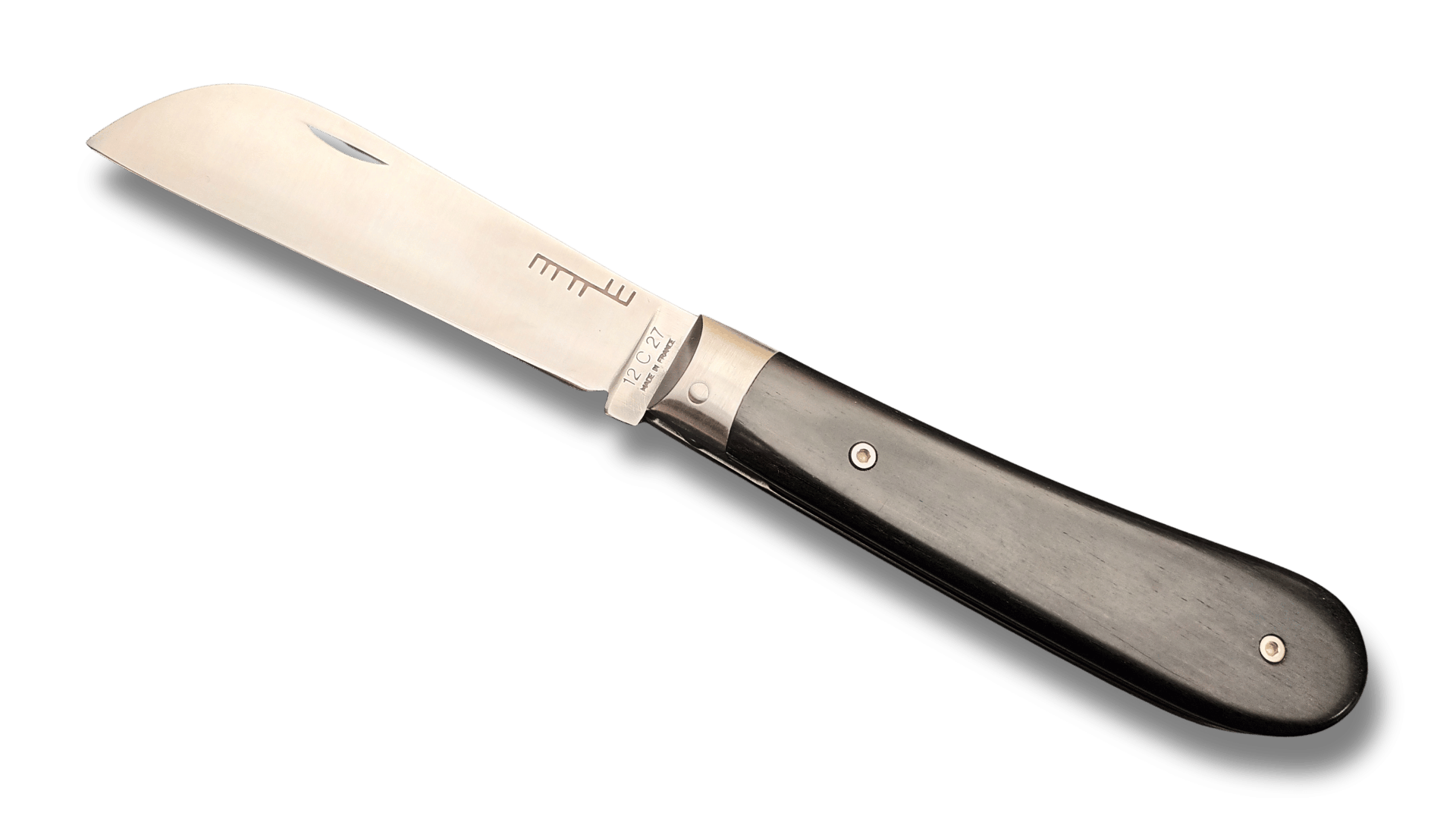

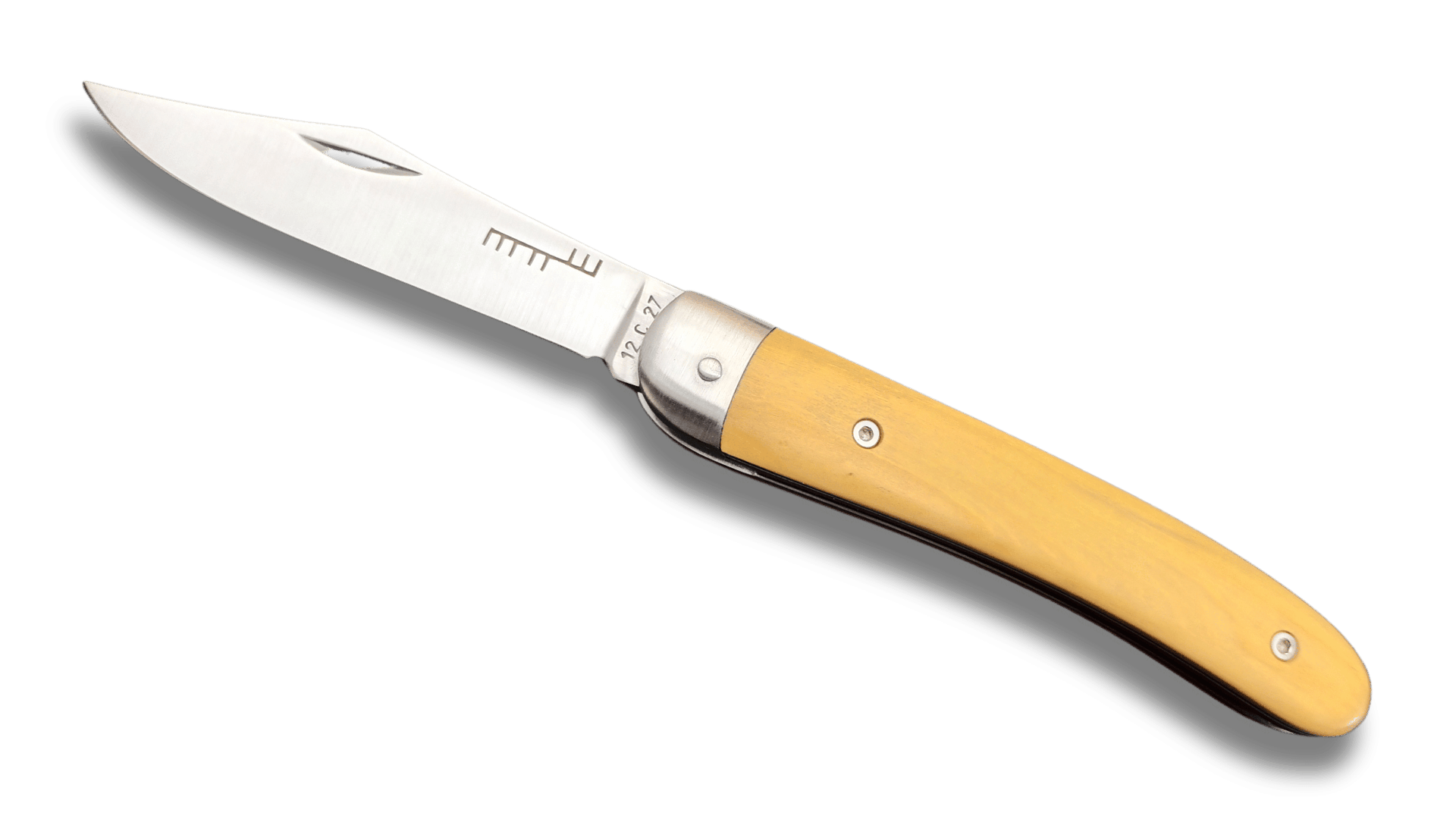
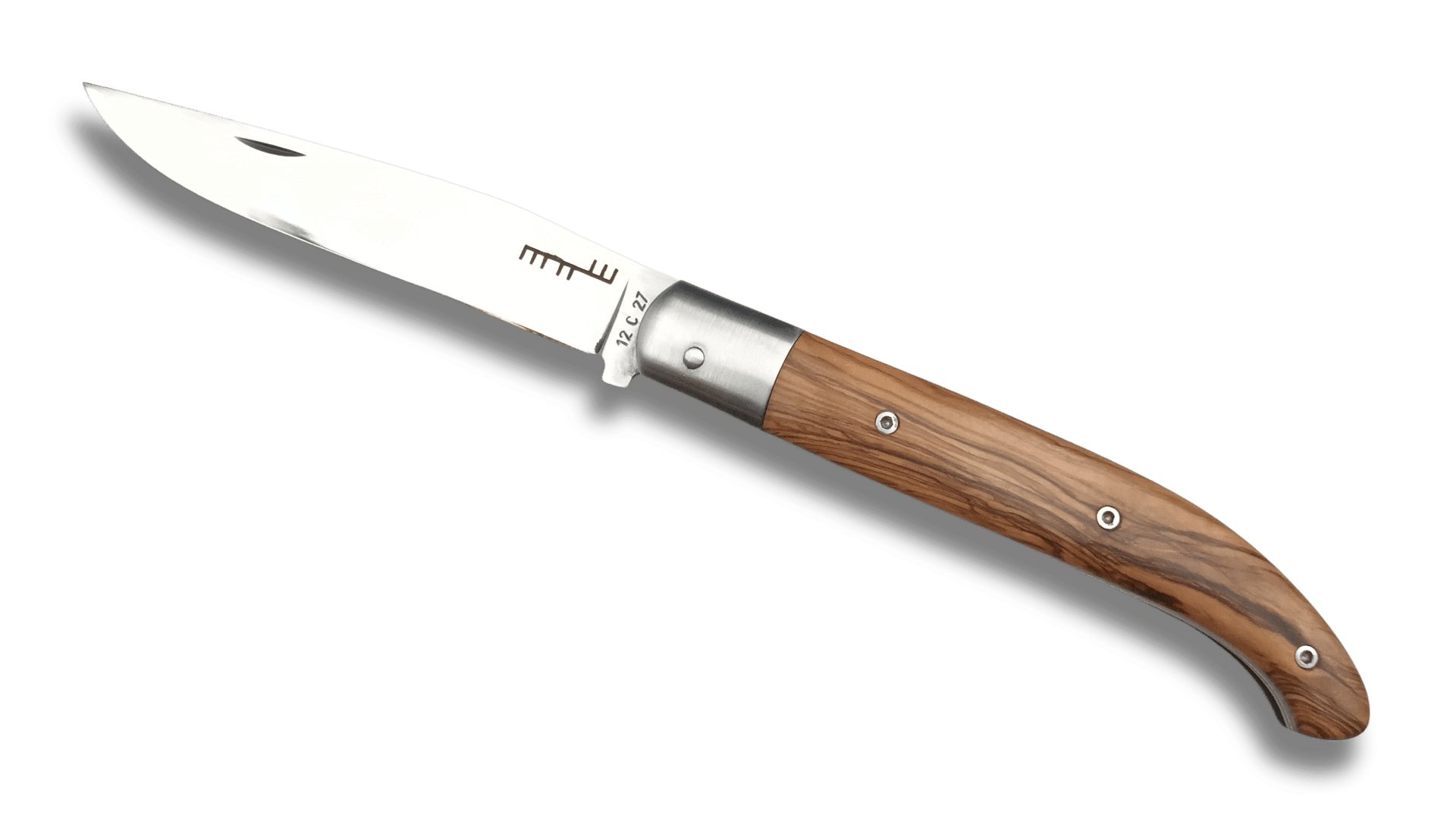
What is a French regional knife?
It is a knife, most often folding, whose shape is associated with a French territory: a name, a silhouette, a mechanism and uses linked to a region. Some forms have been documented for a long time, others result mainly from the cutlery catalogs which named and distributed them. The term therefore covers varied historical realities.
What is the difference between historical form and contemporary reinterpretation?
A historical form is attested by sources: preserved pieces, catalogs, documents. A reinterpretation takes the silhouette, proportions or mechanism of an old form, but assumes current choices of materials, steels and manufacturing. The FL Toussaint models fall under this second approach, and each model page specifies what comes from where.
Are these knives made for everyday use?
Yes, that’s their reason for being. These shapes were designed to serve: cutting bread, cheese, cold meats, accompanying a meal or a snack. The versions manufactured in the workshop use steels and materials chosen for real use, with simple maintenance. A regional knife that remains in a drawer misses its function.
What mechanisms are fitted to these knives?
It depends on the models. The forced notch, a spring mechanism which keeps the blade open without locking it, is fitted to several regional forms. Other mechanisms exist depending on the silhouettes and versions. Each model page indicates the mechanism used, and the dedicated pages explain how they work so you can make an informed choice.
Where are FL Toussaint regional knives made, and by whom?
At Courpière, in the basin of Thiers, in Puy-de-Dôme. Except for production models, each part is entirely made in the workshop. For certain series models, heat treatment or grinding can be entrusted to specialized partners; the design, adjustment, assembly, finishing, sharpening and inspection remain carried out in the workshop.
Why did Thiers produce so many regional knives?
The Thiers basin has concentrated for generations a considerable cutlery production capacity, organized to supply markets throughout France. The Thiernois workshops manufactured and shipped shapes adapted to the uses of each territory, sometimes giving them their name. Many regional knives were therefore born or circulated by Thiers.
How to maintain a regional folding knife?
The main thing is three steps: wipe the blade after use, especially after acidic or salty foods, keep the joint clean and dry, and sharpen regularly rather than rarely. Wooden handles appreciate a suitable oil from time to time. A complete guide details these actions according to the steels and handle materials.