What is the difference between a fixed knife and a folding knife?
A fixed knife has no mechanism: the blade and the handle form a rigid unit. It cleans faster, withstands stress better and has no moving parts. A folding one folds up and slips into your pocket, at the cost of an axis, a spring or friction to maintain. The fixed one is carried in a case, the folding one is carried folded. The choice depends on transport and intensity of use, not on a hierarchy between the two.
What is a Kiridashi for?
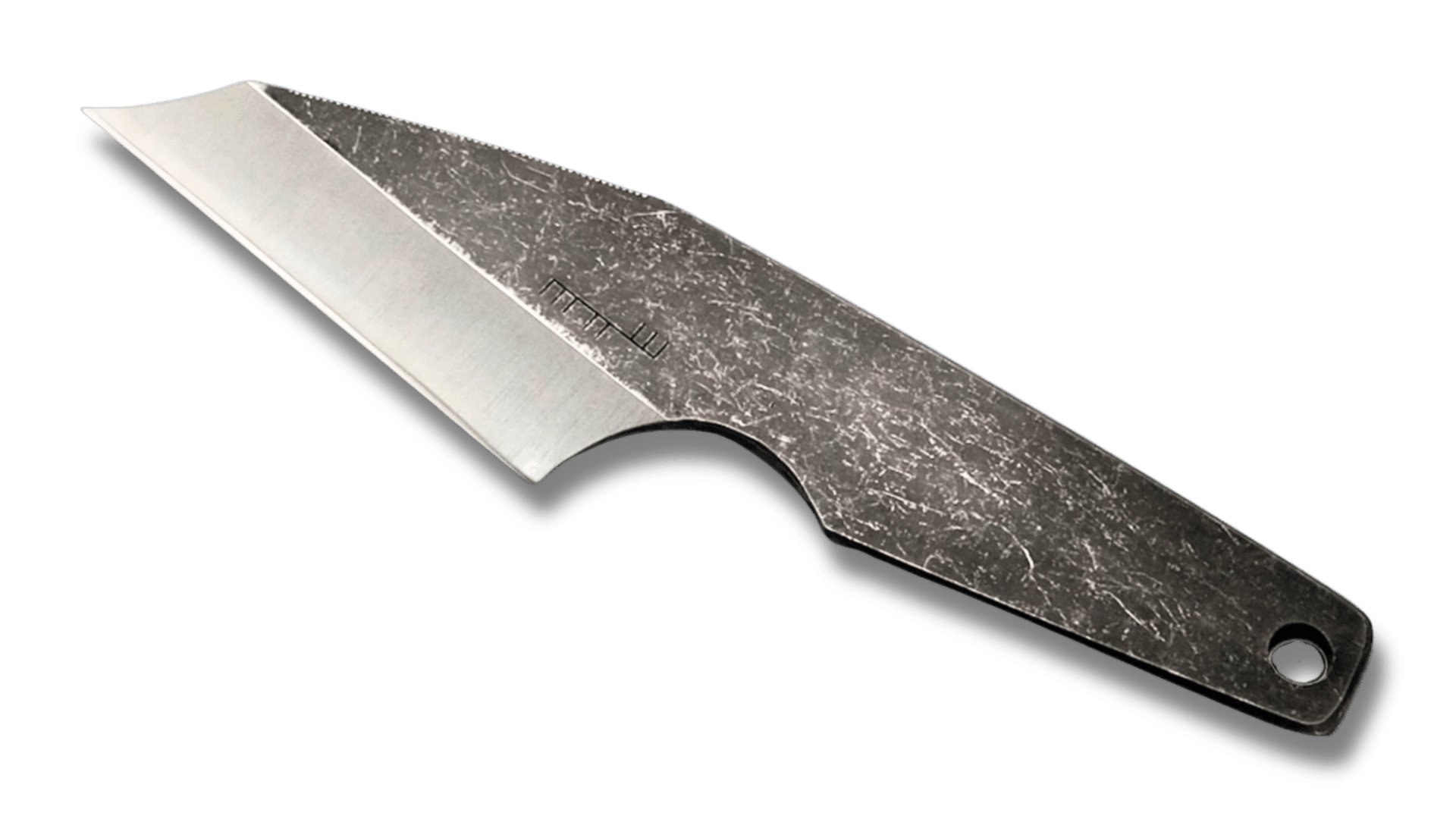
The Kiridashi is a precision tracing and cutting tool from Japanese tradition. Its short, pointed blade cuts wood, leather or paper exactly where it is asked. It is used to mark a line before cutting, adjust an assembly, clean an angle. It stands close to the tip, like a pencil. This is not an outdoor knife: it is a bench and work table tool.
For what uses should you choose a Puukko?
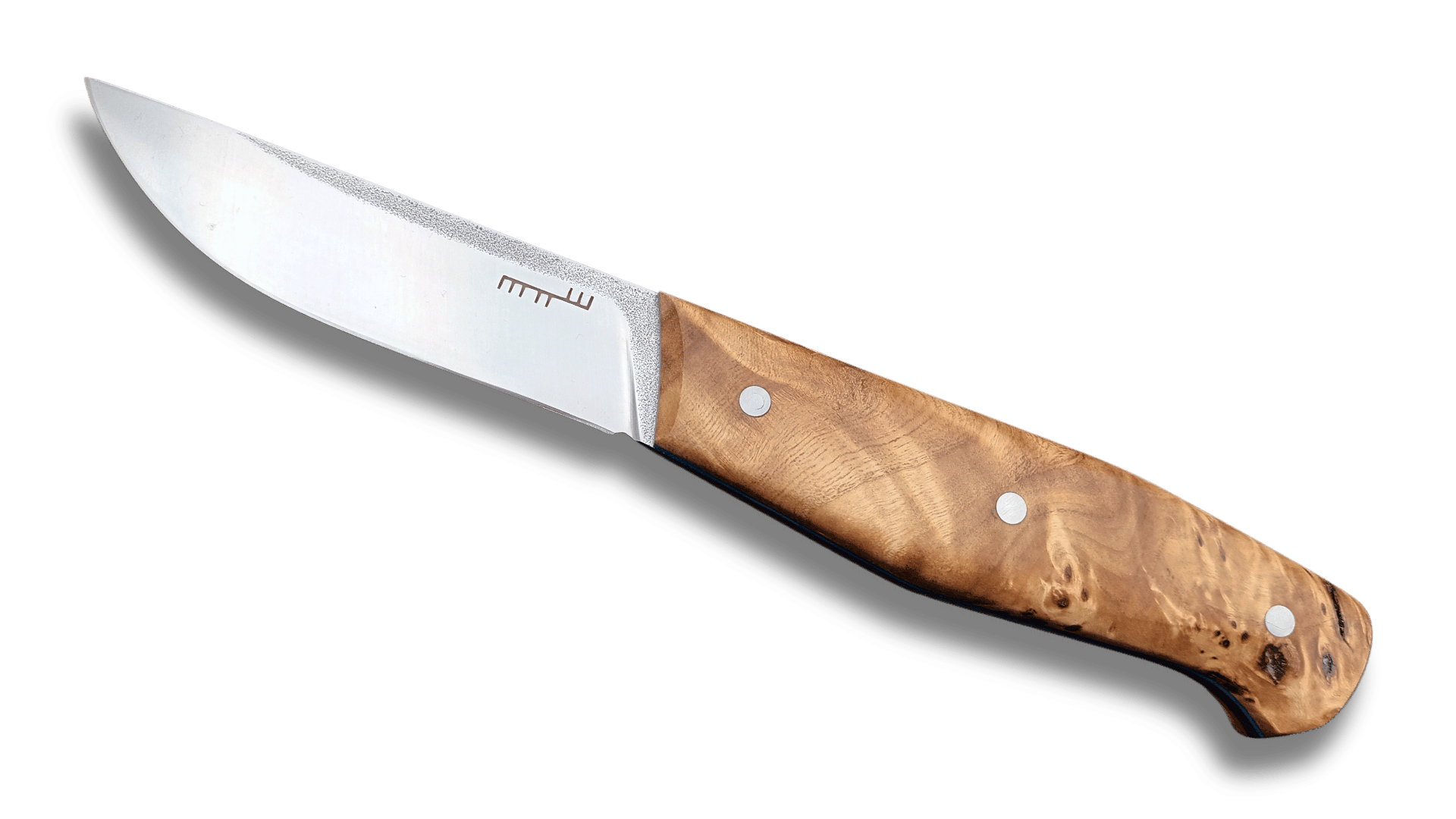
The Puukko is suitable for woodworking and outdoor uses: carving, preparing shavings, cutting a cord, accompanying a camp or a day outside. Its full handle and flat back allow you to press hard when the cut requires it. It is a versatile knife in its register, designed to last a day of work without weakening or tiring the hand.
How to choose between a Kiridashi and a Puukko?
By use. If your main need is tracing, incising and small precise cutting at the workbench, take the Kiridashi. If you are looking for an all-purpose knife for wood and the outdoors, take the Puukko. The two complement each other well: many users end up with one in the apron pocket and the other on the belt. If you only have to choose one, start with the most frequent task.
How to maintain an artisanal fixed knife?
Clean the blade after use, dry completely, paying particular attention to the junction of the handle. A wooden handle appreciates a suitable oil a few times a year. Maintain the edge regularly, with leather or stone, rather than waiting until it is really dull: a few minutes of maintenance avoids a long re-sharpening session. Store the knife in a dry place.
Should you keep a fixed knife in its sheath?
For transport, yes: the case protects the cutting edge and what surrounds it. For long-term storage, it is better to remove the knife from a leather sheath: leather retains humidity and can cause traces of oxidation on the blade. A dry drawer or dedicated storage is best for pieces that don't come out often.
What operations are carried out in the workshop?
The design, cutting files, laser cutting of the blades, adjustment, assembly, finishing, sharpening and final inspection are carried out in the Courpière workshop. On certain series models, heat treatment and preparatory grinding can be entrusted to professional partners. Special parts are entirely manufactured in the workshop. Details appear on each product sheet.
What happens when a model is no longer available?
Its file remains viewable and the piece joins the archives, with its photos and characteristics. Some models come back in series; others remain unique variants. If you are interested in an out-of-print model, contact the workshop: you will find out if it is planned for a future series and within what time frame. The archives also allow you to see the materials and finishes already made.